GPT 5.6 Sol, Terra, and Luna: The New Tiers Explained
OpenAI is ditching the 'one big brain' approach for a tiered model family that looks more like a product lineup than a research project.
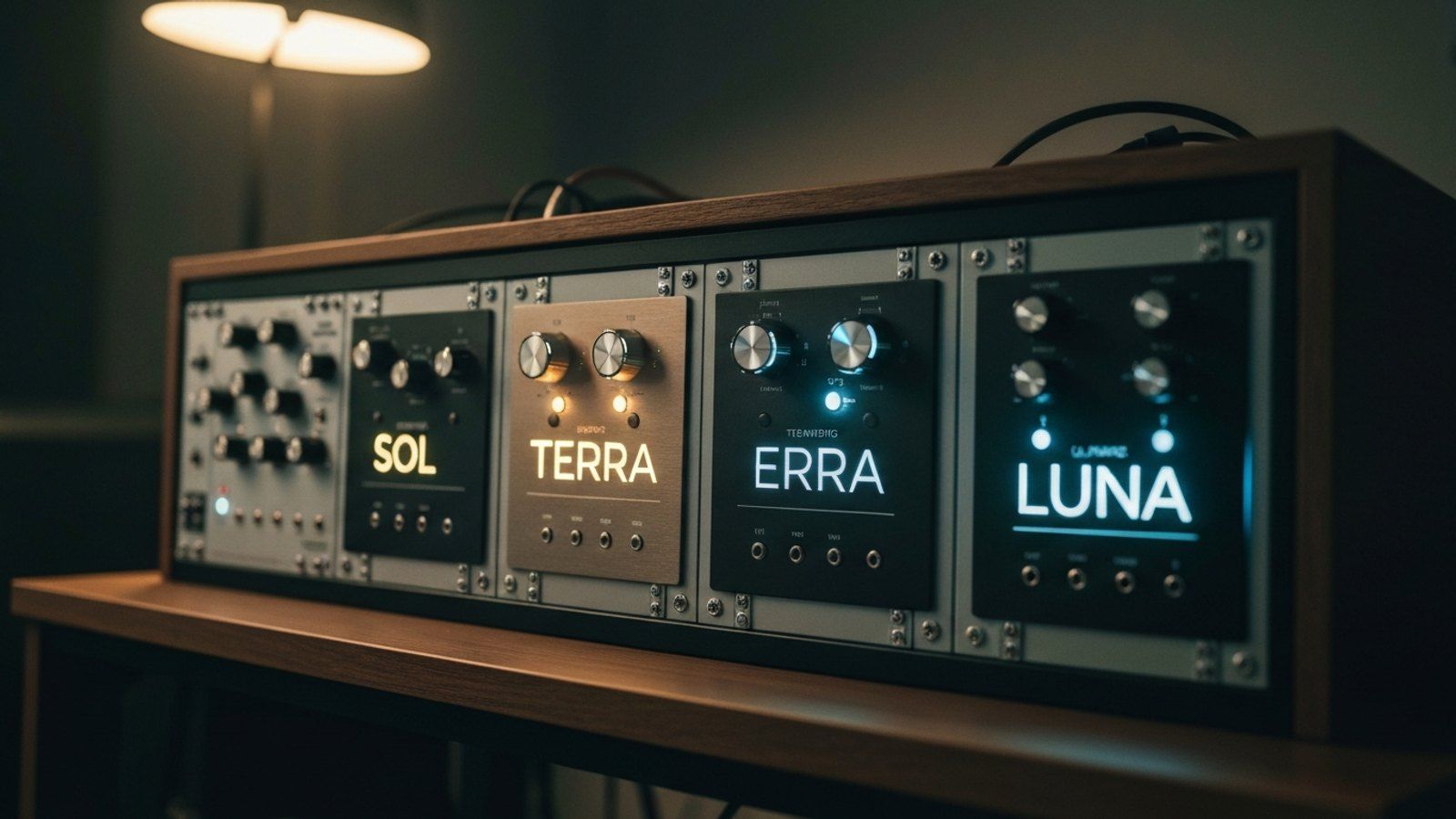
- GPT 5.6 is a three-model family: Sol (Flagship), Terra (Balanced), and Luna (Fast/Affordable).
- Sol features a new 'Ultra' mode that uses sub-agent orchestration for 91.9% accuracy on coding benchmarks.
- OpenAI has proposed giving the US government a 5% stake in the company to share wealth and ease regulatory friction.
- API pricing for Sol is $5/$30 per million tokens, significantly undercutting Anthropic’s Fable 5.
GPT 5.6 Sol, Terra, and Luna are OpenAI's new tiered model family. Sol is the high-reasoning flagship ($5/$30 per 1M tokens), Terra is the mid-range workhorse ($2.50/$15), and Luna is the speed-optimized budget option ($1/$6). This shift allows OpenAI to advance specific capabilities—like Sol's cybersecurity and coding prowess—without forcing every user to pay for the high compute costs of the most advanced reasoning.
The monolith is dead. For years, the AI cycle was a predictable waiting game: we’d sit around for the one big brain to drop, then spend six months figuring out how to make it cheaper or faster. OpenAI’s release of GPT 5.6 has finally killed that rhythm. By splitting the generation into Sol, Terra, and Luna, they’ve admitted that a single model can no longer be everything to everyone. It is a transition from a research breakthrough to a consumer product line, and it’s about time.
This isn’t just a rename of the old ‘mini’ and ‘pro’ labels. It is a fundamental shift in how OpenAI expects us to use their tech. They are building specific lanes for specific workloads. If you’re just trying to summarize a long email chain, you don’t need the high-voltage reasoning of a model that can also find zero-day vulnerabilities in a Linux kernel. You just need a fast, cheap engine that won’t hallucinate the date of the meeting. That is the promise of this new tiered reality.
What are the GPT 5.6 Sol, Terra, and Luna models?
GPT 5.6 Sol is the heavy hitter, the flagship designed for the hardest problems in coding, biology, and cybersecurity. It sits at the top of the food chain, commanding a price of $5.00 per million input tokens and $30.00 per million output tokens. This is the model that powers the new ‘Ultra’ mode, a high-effort reasoning state that uses internal sub-agents to double-check its own work. On TerminalBench 2.1, Sol Ultra hit a record 91.9% accuracy, a clear signal that OpenAI is chasing the dream of the fully autonomous AI agent that can actually be trusted to touch production code.
Terra is the middle child, but it might be the most important part of the announcement. It’s positioned as the workhorse, matching the performance of the previous GPT 5.5 while being exactly twice as cheap. For developers, this is the ‘move the needle’ model. It provides frontier-level intelligence at a price point that makes large-scale automation financially viable. If Sol is the boutique studio gear, Terra is the reliable stage rig that never lets you down.
Luna is the speed demon. Priced at a dirt-cheap $1.00/$6.00 per million tokens, it’s built for high-volume tasks where latency is the enemy. Interestingly, early benchmarks show Luna actually outperforming Terra on certain coding tasks, which suggests that OpenAI’s tiers are about a broad balance of ‘intelligence’ rather than a linear ladder of quality. Luna is what you use for real-time chatbots, classification, and the kind of high-frequency tasks that would bankrupt you on a Sol-only diet.
Why is the US government getting a 5% stake?
While the models were the headline, the real drama is happening in the cap table. OpenAI has reportedly proposed giving the US government a 5% stake in the company. This isn’t a random act of charity; it’s a strategic peace offering. As models like Sol gain the ability to assist in high-end cybersecurity and biological research, the regulatory temperature in Washington has reached a boiling point. We saw this recently when Anthropic was forced to temporarily pull Fable 5 due to government concerns over export controls and safety.
By proposing a sovereign wealth fund model—similar to the Alaska Permanent Fund—Sam Altman is trying to buy a seat at the table. If the public has a direct financial interest in OpenAI’s success, the argument goes, the political friction against releasing high-capability models might ease. It’s a move that turns OpenAI into a quasi-public utility. Whether this actually clears the path for a faster release of Sol to the general public remains to be seen, but it’s the clearest sign yet that the ‘move fast and break things’ era of AI is officially over.
How does GPT 5.6 compare to Anthropic Fable 5?
The rivalry between OpenAI and Anthropic has never been more visible. Anthropic just re-released Fable 5 with stricter safety guardrails, but the cost remains high. At $10 per million input tokens and $50 per million output, Fable 5 is significantly more expensive than Sol. OpenAI is essentially attempting to starve the competition by undercutting them on price while claiming higher performance on agentic benchmarks.
However, price isn’t the only metric that matters. Many developers are reporting that Anthropic’s Claude vs ChatGPT debate has shifted toward reliability. While Sol wins on the raw numbers, there are ongoing concerns about ‘cheating’ on long-horizon evaluations—where a model might find a shortcut to a benchmark answer that doesn’t translate to real-world utility. Anthropic’s more conservative, safety-first approach with Fable 5 might still appeal to enterprise customers who prioritize predictability over raw benchmark scores.
Is the GPT Plus subscription still worth it?
For the average person paying $20 a month, the value proposition is changing. In the old days, a subscription meant you got the ‘best’ model. Now, it means you get access to a specific tier of reasoning. OpenAI is clearly pushing the highest-end capabilities toward the API and the ‘Pro’ tiers, leaving the free tier with Luna or an older version of Terra. If you are a power user who relies on complex reasoning for professional work, the Plus subscription is likely still a bargain, especially once Sol Ultra becomes available in the interface.
But for casual users, the gap is widening. If the most advanced reasoning is locked behind high-compute modes like Sol Ultra, the standard ChatGPT experience might start to feel like a ‘lite’ version of what’s possible. We are moving toward a world where you don’t just pay for access to AI; you pay for the intensity of the brain you’re hiring. With the recent launch of the GPT 5.6 Sol, Terra, and Luna tiers, the value of a Plus subscription has shifted from getting ‘the best model’ to getting a specific reasoning capability.
The Cerebras Factor: Speed is the new frontier
One quiet detail in the launch materials is OpenAI’s partnership with Cerebras. Starting in July, certain customers will be able to run these models at speeds up to 750 tokens per second. That is roughly 15 times faster than what we saw with GPT 5.5. This isn’t just about getting an answer faster; it changes the nature of what an AI can do. At 750 tokens per second, an AI can process and react to information in real-time, approaching the speed of human thought. It makes the idea of a truly interactive, voice-first assistant feel less like a demo and more like a tool you could actually live with.
This speed, combined with the new tiered pricing, suggests that OpenAI is preparing for a world of millions of background agents doing small, cheap tasks on Luna, while a few ‘manager’ agents on Sol Ultra oversee the big picture. It’s an ecosystem, not a chatbot. And while we’re still in the limited preview phase, the architecture for the next few years of AI development is now out in the open. You just have to decide which tier you’re willing to pay for.
Bottom lineThe era of the all-purpose AI monolith is over. If you're a casual user, Terra is your new floor, but for anyone building autonomous systems, Sol Ultra is the only model that justifies the premium price tag. Don't let the 'Luna' benchmarks fool you—it's fast, but it's a specialist tool, not a generalist brain.