SpaceX Bought Cursor: The AI Agent War Just Got Physical
Forget the chatbot wars. Elon just bought the world's favorite AI code editor to build a software-defined empire. Here is what happens to your workflow next.
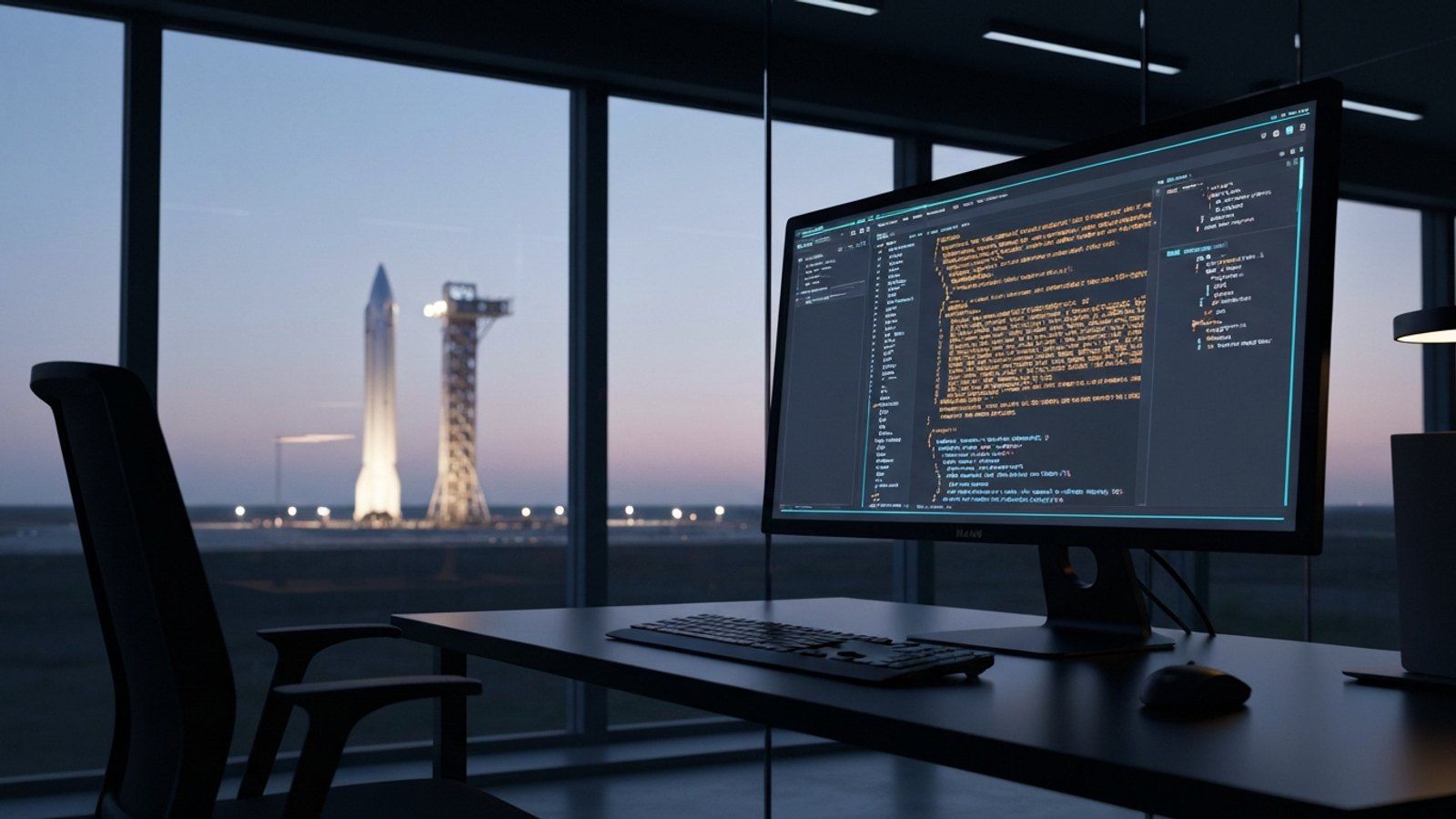
- SpaceX acquired Cursor (Anysphere) for $60 billion in an all-stock deal following its massive IPO.
- The acquisition moves Cursor from an independent VS Code fork to the centerpiece of the SpaceX/xAI compute ecosystem.
- Anthropic's recent export ban makes Cursor a strategic 'safe haven' for US-based developers, though privacy concerns remain.
- OpenAI's upcoming GPT-5.6 and the 'Bidi 1' voice model are the primary competitors for developer mindshare.
SpaceX bought Cursor to own the engineering workflow, not just the compute. By integrating Cursor with its massive Colossus 2 supercomputer and xAI's models, SpaceX aims to turn the code editor into an autonomous agent platform that can design, test, and deploy software (and hardware) with minimal human intervention. For users, this means tighter integration with xAI's Grok models but also a pivot away from the agnostic 'use any model' philosophy that made Cursor a hit.
You don’t spend sixty billion dollars on a text editor because you want to help people write cleaner Python. You do it because you want to own the factory that builds the future. SpaceX, fresh off a blockbuster IPO that pushed its valuation past $2.5 trillion, just swallowed Cursor (Anysphere) in an all-stock deal that has sent the developer world into a collective spin. It is the kind of move that feels inevitable once you see it: the world’s most ambitious hardware company buying the world’s most intuitive software-building tool.
SpaceX is a rocket company. Then it was a satellite company. Now, it’s an AI workflow company. By acquiring Cursor, Elon Musk’s empire has secured the “last mile” of the engineering process. They aren’t just renting you a chatbot; they are providing the cockpit where the next generation of autonomous AI agents will live. If you have spent any time in Cursor lately, you know it feels less like an editor and more like a partner. Now, that partner has a $60 billion rocket engine behind it.
GitHub’s answer to the coding-agent race is Agent HQ, which runs Claude and Codex side by side.
Why did SpaceX buy an AI code editor?
The play here is about workflow ownership, not just compute rental. For the last year, the AI race has been a battle of models—who has the most parameters, who has the longest context window. But as GPT-5.6 and its 1.5 million token window loom on the horizon, the focus is shifting. Models are becoming commodities. The real value is in the interface where the work happens.
SpaceX already owns the hardware. Between its Starlink constellation and the massive Colossus 2 supercomputer—which recently secured a $6.3 billion compute deal with Reflection AI—the company has the raw power. What it lacked was the distribution. Cursor provides that. It is the daily habit of millions of developers. By owning Cursor, SpaceX can pipe its proprietary xAI models directly into the hands of the people building the next era of tech, bypassing the friction of the OpenAI or Anthropic ecosystems.
Is Cursor still the best tool for developers?
If you are looking for pure performance, the answer is still a resounding yes. Even with the acquisition noise, Cursor’s “Plan Mode” and its ability to manage complex, multi-file refactors remain the industry standard. It currently outpaces the new OpenAI Codex in sheer “vibe coding” fluidity—the ability to describe a feature in plain English and watch the editor weave it into your existing codebase.
However, the competition is closing in. OpenAI is prepping its own massive update with GPT-5.6, expected this Thursday, which reportedly integrates Playwright for autonomous browser testing directly into the chat. Meanwhile, the Anthropic export ban has created a bizarre schism in the market. If you are a developer in Europe or Asia, you might find yourself locked out of the latest Claude Fable 5 models, making the SpaceX-backed Cursor one of the few “frontier” tools still globally available, provided you don’t mind the Musk-adjacent data policies.
What happens to your data and privacy?
This is where the rhythm of the deal hits a discordant note. Cursor became a darling of the indie dev scene because it was a nimble, agnostic alternative to ChatGPT. You could plug in your own API keys, choose your favorite model, and keep your code relatively siloed. Under the SpaceX umbrella, that agnosticism is under threat.
Reports indicate that SpaceX plans to use the vast ocean of telemetry and code patterns generated in Cursor to train its next-generation engineering models. While “Privacy Mode” still exists in the settings, the pressure to opt-in for “enhanced agentic features” will be immense. For small businesses, this is a calculated risk. You get world-class AI tools for your business, but you are essentially contributing to the SpaceX engineering hive mind.
How does this affect the AI agent race?
We are moving from the era of “Chat with AI” to “Execute with Agents.” The definition of an AI agent is shifting from a bot that talks to a system that does. Cursor is the first major acquisition that treats the IDE as the operating system for these agents.
Imagine a world where you don’t just write code in Cursor; you tell the editor to “build a satellite tracking dashboard,” and it spins up the infrastructure on Starlink-connected servers, writes the frontend using the latest xAI models, and deploys it autonomously. That is the SpaceX vision. It’s a vertical integration of the entire tech stack, from the silicon in the data center to the keys on your laptop.
For the average user, the verdict is clear: Cursor is still the king of the hill, but the hill is now part of a much larger, more complex territory. If you can stomach the baggage of the SpaceX ecosystem, the features coming in the Q3 “Agentic Update” will likely be light-years ahead of anything else. But if you value being a free agent in the AI world, start keeping an eye on the best free AI tools that are staying independent. The era of the neutral code editor is officially over.
Bottom lineCursor remains the most powerful AI code editor on the market, but its new home at SpaceX means you are now choosing a side in the geopolitical AI war. If you want the most integrated 'agentic' experience and live in the US, stay with Cursor. If you are an international dev or a privacy purist, it is time to look at the new OpenAI Codex or local-first alternatives.