Best AI Smart Glasses 2026: What Earns Face Time
Two lanes right now: glasses that hand you a giant screen, and frames that put an assistant on your face. I break down which one actually earns a spot on yours.
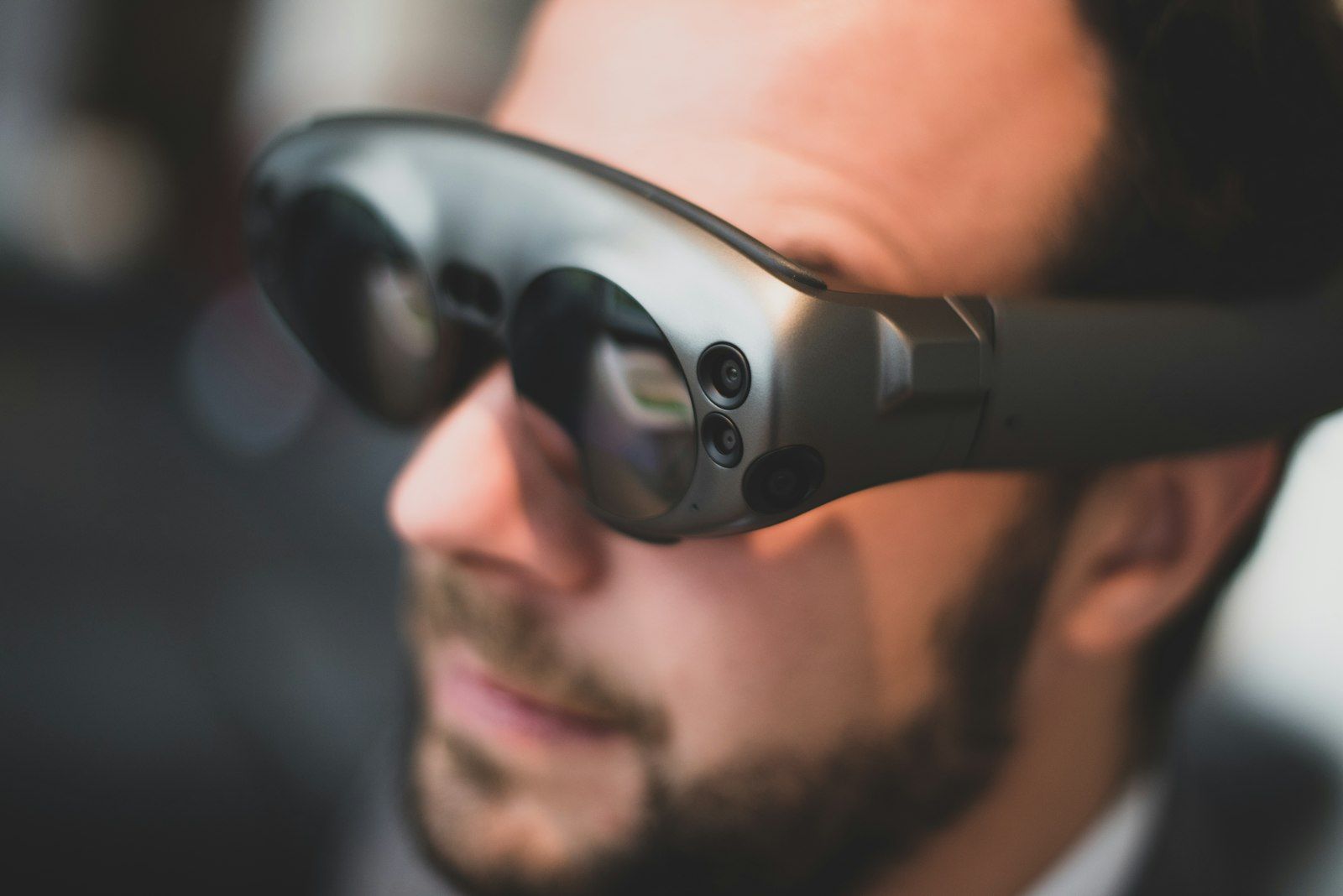
- VITURE Luma Ultra: a 152-inch virtual screen from 1920x1200 Sony Micro-OLED panels, 120Hz, $600 — the pick for actual work.
- Meta Ray-Ban Display: a full-color monocular HUD (600x600px, ~20-degree FOV) plus the Neural Band, launched at $799.
- XREAL One Pro runs a 171-inch 1080p 120Hz virtual display for $599; Sightful Spacetop G1 is a $1,900 screenless AR laptop.
- Advanced AI features are going paid: Meta One Premium is ~$20/month, Solos AirGo 3's Premium tier is ~$10/month.
The best AI smart glasses in 2026 for productivity are the VITURE Luma Ultra: a 152-inch virtual screen from Sony Micro-OLED panels at 1920x1200 per eye, 120Hz, for $600. The Meta Ray-Ban Display ($799) wins on style with a monocular HUD and on-face Meta AI, but its ~20-degree display is too small for serious desk work.
I’m over the phone as a work surface. Staring at a 6-inch slab to run agents in 2026 feels like coding on a flip phone. The best AI smart glasses this year split into two clean lanes, and picking wrong is how you waste $600 to $1,900. I’m not selling you holograms. I’m telling you what earns a spot on your face.
Lane one: display glasses that hand you a giant virtual screen. Lane two: lifestyle frames that put an AI assistant on your face. One wants to be your desk. The other wants to be your co-pilot. Know which you’re buying.
Which AI smart glasses are best for real work in 2026?
For desk-replacement work, the VITURE Luma Ultra leads. It pushes a 152-inch virtual screen from Sony Micro-OLED panels at 1920x1200 per eye, 120Hz, 1500 nits, for $600. That’s the resolution to read logs, not just watch a movie.
The software is the real moat. The SpaceWalker app supports up to three virtual displays across iOS, Android, macOS, and Windows, and built-in diopter adjustment up to -6.0D on the Luma and Luma Ultra means nearsighted builders skip the inserts. Just know it’s a display, not a computer — it tethers to a phone, PC, or console for compute.
Can AI smart glasses replace your laptop screen?
Partly. The Sightful Spacetop G1 is a $1,900 screenless AR laptop that drives a ~100-inch virtual display through bundled XREAL Air 2 Pro glasses at 1920x1080, 90Hz. It runs SpaceOS, built on Google’s ChromiumOS — not Android — on a Snapdragon QCS8550 with 16GB RAM.
That heritage is the ceiling. It’s excellent for a web-first, cloud workflow, but if you need native IDEs or heavy local compute, you’ll hit the wall. It’s a minimalist’s tool. If you want the deeper trade-offs, read the companion piece on AR glasses for productivity, and think about it the way you’d architect a production AI stack: right tool for the workload.
What can the Meta Ray-Ban Display actually do?
Meta is winning the culture side. The Meta Ray-Ban Display puts a full-color monocular display in the right lens (600x600px, ~20-degree FOV) paired with the Meta Neural Band, launched at $799, in stores from September 30, 2025.
Here’s the nuance people get wrong: its Meta AI runs on a custom version of Llama 4. Muse Spark — Meta Superintelligence Labs’ first model — is replacing Llama on the displayless Ray-Bans and Oakleys, and the Display is the exception that keeps custom Llama 4. Beautiful notification-and-assistant layer. But $799 for a ~20-degree HUD is not a workspace. If you’re already deep in Apple Intelligence, the lock-in cuts both ways.
Do AI smart glasses need a monthly subscription?
Increasingly, the advanced features do. Meta One Premium (~$20/month) gates extras like Conversation Focus beyond three free hours a month and expanded image/video generation, while core AI stays free. Solos plays the same game one lane down: the AirGo 3 Premium tier (~$10/month) unlocks enhanced AI features like natural text-to-speech and standalone chat.
Display glasses dodge this. VITURE and XREAL are “dumb” panels — they leave the AI logic to your connected device’s apps, which is also a quiet privacy win.
| Glasses | Best for | Display | Price | Where it loses |
|---|---|---|---|---|
| VITURE Luma Ultra | Multi-monitor work | 1920x1200 Micro-OLED, 152” virtual, 120Hz | $600 | Needs a tethered phone/PC/console to run |
| Meta Ray-Ban Display | Style + heads-up AI | Monocular 600x600, ~20-degree FOV | $799 | Too small a display for real desk work |
| XREAL One Pro | Media & gaming | 1080p, 171” virtual, 120Hz | $599 | FHD, not the 1200p of the Luma Ultra |
| Sightful Spacetop G1 | Screenless purists | XREAL Air 2 Pro, ~100” virtual, 90Hz | $1,900 | ChromeOS-based SpaceOS limits native/local apps |
The XREAL One Pro splits the difference: a 171-inch 1080p 120Hz virtual display with a custom X1 chip and Sound by Bose for $599, cut from $649. Great for media and gaming, a step under the Luma Ultra for text.
Stop waiting for the “perfect” pair. Need more screen? Buy the VITUREs. Want to talk to your face? Get the Metas. Just stop looking down.
#TheAIMogul
Bottom lineFor real desk-replacement work, buy the VITURE Luma Ultra. The Meta Ray-Ban Display is a sharp style-plus-assistant play, but a monocular HUD is not a workspace — know which lane you're buying into.